


Shockproof T-slot Platform | Damping Coefficient > 0.25 | Resolves Equipment Positioning Drift | Maintenance
Other Products


T-slot Table Design Selection Standards: Size, Cost, and Demand Analysis
In the fields of industrial production and mechanical manufacturing, the T-slot table, as a fundamental tooling equipment, directly impacts processing efficiency, cost control, and long-term user experience through its design and selection. This article systematically analyzes the selection logic of T-slot tables from three key dimensions—size standards, cost structure, and demand matching—to provide actionable reference solutions for engineering decisions.
I. Size Standards: Balancing Precision and Expandability
The core dimensional parameters of T-slot tables include table size, slot pitch, slot width, and load capacity. 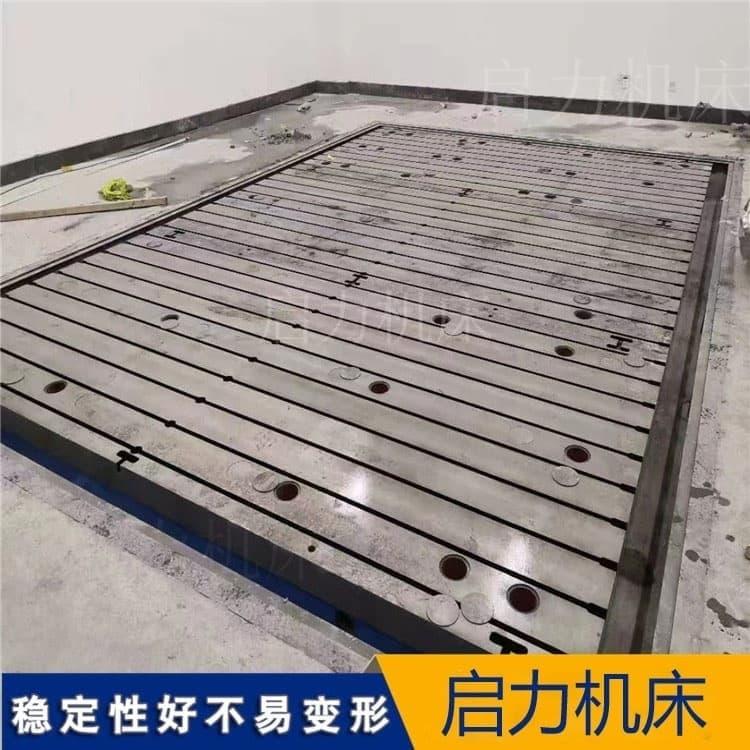
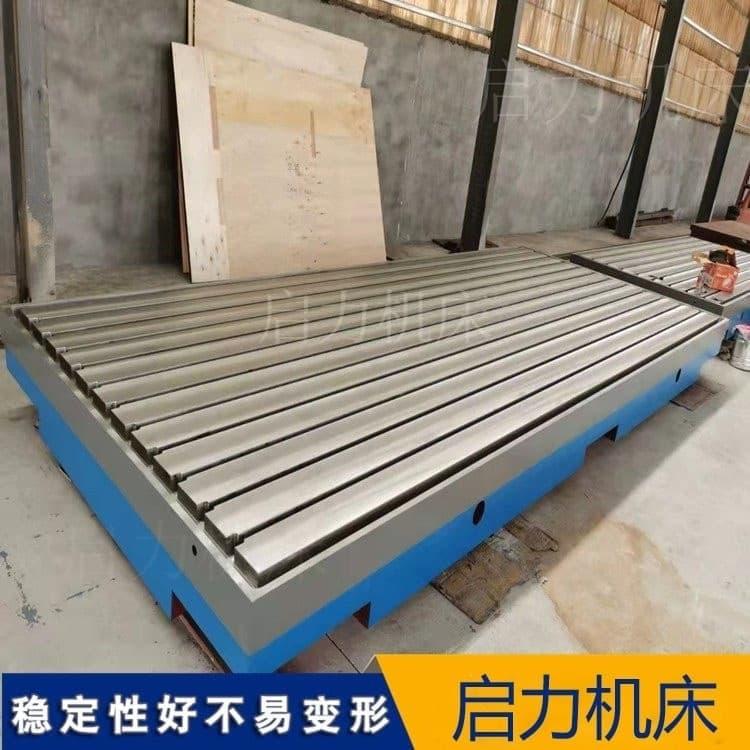
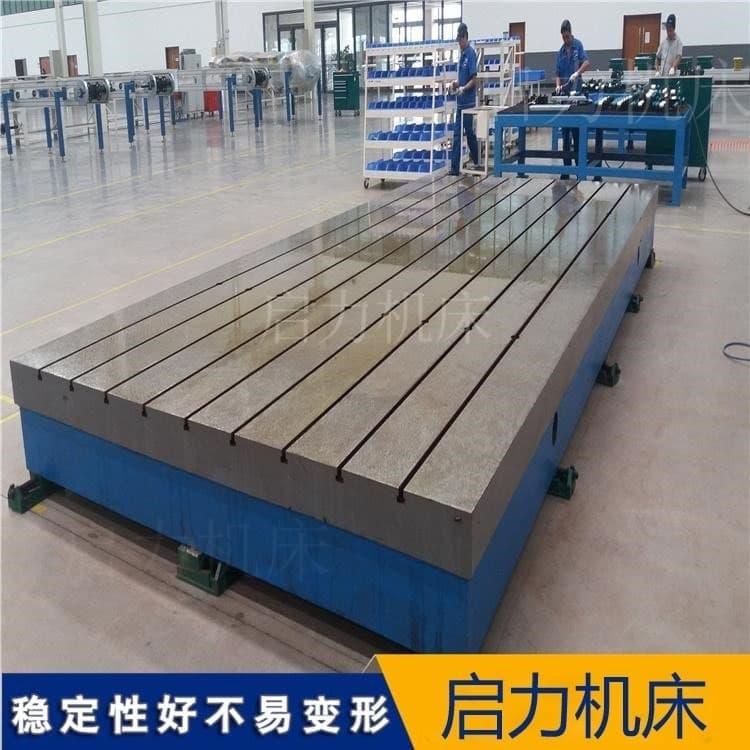 According to international standards and domestic T7974-2019 regulations, common table sizes range from 400×600mm to 2000×4000mm, with slot pitches typically available in three grades: 100mm, 150mm, and 200mm. For machining scenarios, a high-density layout with a 100mm slot pitch is recommended to accommodate more fixture combinations; for heavy workpiece processing, a 200mm wide slot pitch should be prioritized to facilitate the installation of large positioning components.
Slot width design must match T-bolts, with national standard series being 14mm, 18mm, and 22mm. It is worth noting that table thickness is not always better—for cast iron tables, every 10mm increase in thickness adds approximately 8% to the weight but only improves rigidity by 3%-5%. Experience shows that for medium-load machining, selecting an HT250 cast iron table with a thickness of 80-120mm can meet the vast majority of requirements, while excessive thickness only adds unnecessary material costs.
II. Cost Structure: Full Lifecycle Value Assessment
The cost model for T-slot tables includes two major categories: explicit costs and implicit costs. Among explicit costs, materials account for about 45% (for cast iron tables), machining fees for 30%, and surface treatment for 15%. Current market quotes show that a 1.5m×3m HT250 table ranges from 8,000 to 15,000 RMB, while a Q235 steel welded table of the same size can be 40% cheaper, but the risk of deformation during long-term use must be considered.
Implicit costs are even more critical: high-quality tables can achieve repositioning accuracy of up to 0.02mm/m, whereas inferior products may exceed a tolerance of 0.1mm after six months of use, leading to an annual increase of about 12% in rework costs. A case study from an automotive parts company showed that after switching to high-precision tables, fixture adjustment time was reduced from 45 minutes per piece to 15 minutes per piece, saving over 180,000 RMB annually in labor costs. It is recommended to adopt a comprehensive evaluation method of "initial cost + 5-year maintenance cost." Although branded products may be 20%-30% more expensive upfront, they often offer lower total lifecycle costs.
III. Demand Analysis: Scenario-Based Selection Method
1. Mass Production Scenarios: For automotive and 3C industries, modular combination tables such as the MTS series expandable system are recommended, enabling quick reconfiguration through standard interfaces. A mobile phone casing production line using 600×900mm unit tables reduced changeover time by 76%.
2. Heavy-Duty Machining Scenarios: Industries like wind power and mold making should focus on the table’s natural frequency指標(biāo). Experimental data show that when the ratio of table weight to workpiece weight is ≥3:1, vibrations below 60Hz can be suppressed. For workpieces over 5 tons, double-layer structured tables with reinforcing ribs are recommended, which can improve bending stiffness by up to 200%.
The essence of T-slot table selection is finding the balance between "sufficient reliability" and "over-engineering." Data indicate that about 67% of users encounter issues with either overspecification or underspecification during procurement. It is advisable to adopt a flexible configuration scheme of "main table + auxiliary modules" to meet current needs while allowing room for future upgrades. Through scientific selection methods, table utilization can be increased by over 30%, and the payback period can be shortened to 2-3 years.
Qili Machine Tool, Ms. Xie 13785751790
| Industry Category | Chemicals/Chemical Intermediates/Intermediate Compounds |
|---|---|
| Product Category | |
| Brand: | 啟力 |
| Spec: | 3000*5000 |
| Manufacturer: | 泊頭啟力機(jī)床 |
| Origin: | 111309 |


